9 Steps to Finish Your PhD Thesis in 12 Months — Practical 2026 Timeline
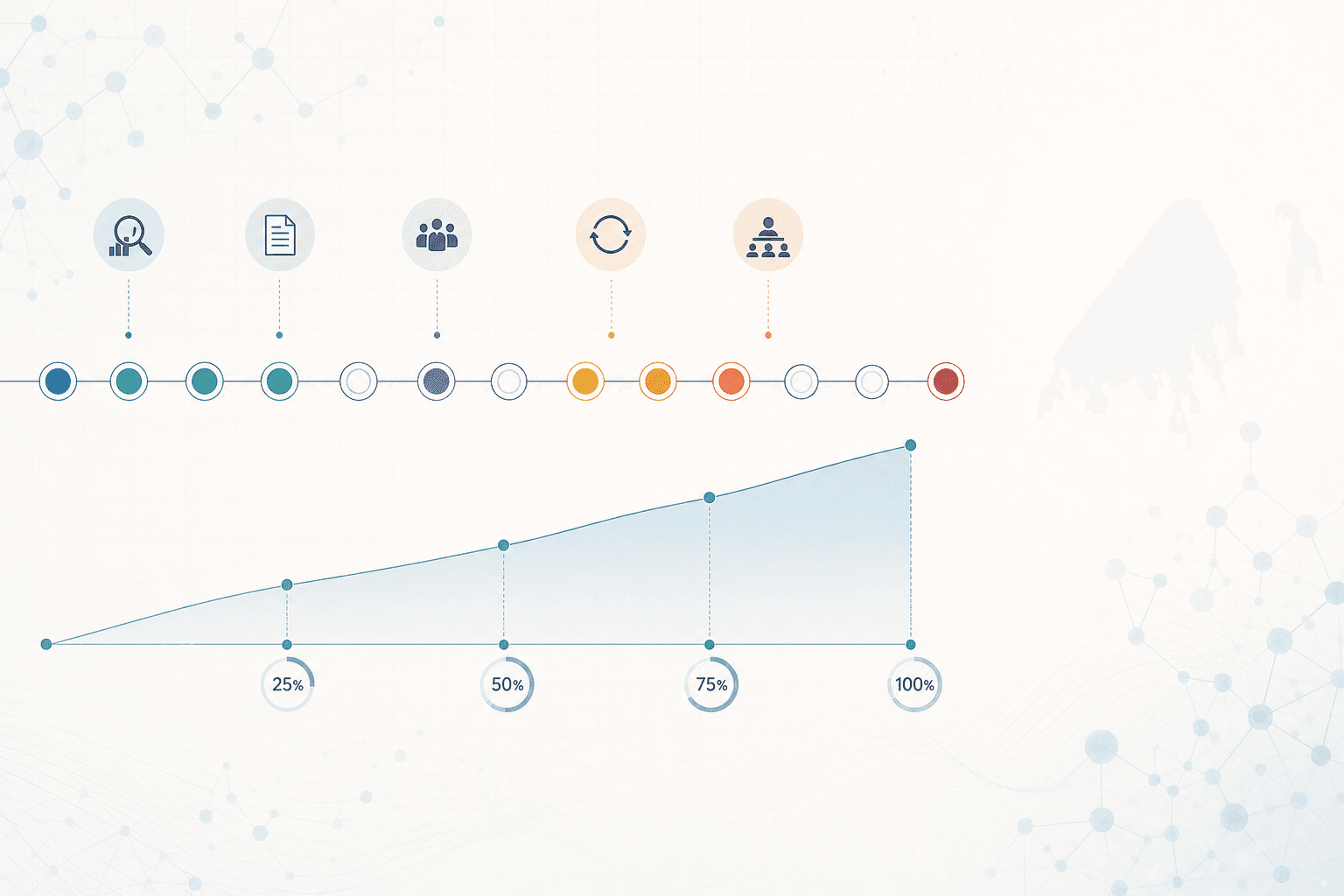
You can finish a defensible, well-written PhD thesis in 12 months — but only if you treat the next year as a project with a timeline, measurable milestones, disciplined writing habits, and intentional committee and advisor management. This is not about rushing science; it’s about removing process friction and making the remaining work tractable. Below I give a practical, month-by-month plan with nine concrete steps you can start today (11/09/2026) and follow to reach defense-ready status in a year.
Finish by treating the final 12 months as a funded, deadline-driven project: set a weekly writing rhythm, lock scope with your advisor and committee, build a revision pipeline, and anticipate common failure modes so you can avoid them.
Why this matters now
- The 2024 Survey of Earned Doctorates shows that doctoral production remains high — 58,131 research doctorates in 2024 — and the career landscape is shifting: only 40% of new PhDs with non-postdoc U.S. employment accepted academic positions while 40% went to industry/business (2024 SED, the most recent release). That tighter market increases pressure to finish and move to the next stage.
- Many departments and funding sources expect timely completion. A clear 12-month plan reduces stress, improves job prospects, and prevents wasted years.
Nine concrete steps (and a practical 12‑month timeline)
- Month 0 — Decide scope and define the “minimum defendable” thesis
- Action: Draft a one-page Scope Document answering: What are the three central claims? What experiments/analyses are essential to support each claim? What can be deferred to future work or appendices?
- Deliverable: One-page Scope Document, signed off by your advisor.
- Why: Ambiguity in scope is the single biggest schedule killer. Locking scope prevents mission creep.
- Month 0–1 — Create a backward schedule with fixed milestones
- Action: Work backward from your ideal defense date and set major gates: data completion, methods chapter draft, results chapters first draft, full draft, committee read, revisions, defense.
- Deliverable: A shared calendar with milestone dates and weekly sprints (use Google Calendar + Trello/Notion).
- Practical tip: Add buffer weeks for reviewer delays and unexpected experiments (build in 6–8 weeks contingency).
- Month 0–2 — Negotiate a clear advisor and committee plan
- Action: Meet your advisor to confirm the Scope Document, feedback loops (how soon they will review drafts), and preferred communication cadence. Invite committee members and ask for their availability windows across the year.
- Deliverable: Written agreement on review turnaround times (e.g., 7–10 business days for chapter drafts) and scheduled committee meeting dates.
- Why: Committee availability and slow reviews are frequent causes of delay. Make expectations explicit.
- Months 1–4 — Finish essential experiments/analyses and document as you go
- Action: Prioritize only the experiments required by your Scope Document. While doing them, write methods and results text in parallel rather than waiting until all data are done.
- Deliverable: Drafts of methods and results sections for each core claim.
- Practical tip: Use a lab notebook and a “data-to-text” checklist: raw data → cleaned dataset → figure/table → one-paragraph interpretation → figure legend.
- Months 3–6 — Build a daily/weekly writing habit and a chapter pipeline
- Action: Commit to a concrete weekly writing quota (e.g., 1,000 words/week or 8 focused hours/week). Use the “15-minute momentum” trick: start with a 15‑minute focused block and extend.
- Deliverable: First full drafts of at least two major chapters (e.g., Methods + Results for Claim 1 and Claim 2).
- Tool recommendation: Use reference managers (Zotero/Mendeley) with a writing template and styles preconfigured.
- Why: Writing while you work prevents the “all-at-once” crunch that produces low-quality final drafts.
- Months 5–8 — Iterate with targeted feedback and preempt common reviewer comments
- Action: Submit chapter drafts to advisor in a staged manner (one chapter per 2–3 weeks). Keep edits focused: accept big structural changes early, nitpicks later.
- Deliverable: Advisor-reviewed chapters incorporated into a partial thesis (50–75% complete).
- Data-backed insight: Given the shifting employment landscape — 70% of S&E doctorate recipients had definite commitments in 2024 — finishing on time helps secure early career moves; every month spent stalled reduces competitive leverage (2024 SED).
- Practical tip: Maintain a “feedback log” tracking who reviewed what, when, and what changes were requested to avoid repetitive loops.
- Months 7–9 — Produce and polish the full thesis draft; run a mock defense
- Action: Compile a full draft including abstract, introduction, literature review, methods, results, discussion, and conclusion. Schedule a mock defense with your advisor and at least one committee member or a trusted peer.
- Deliverable: Full draft (word-processed, formatted to department specs) and a recorded mock defense session.
- Why: Mock defenses reveal weak arguments and slide/storytelling problems before the committee sees the thesis.
- Months 9–11 — Submit to committee, manage revisions, and prepare for defense logistics
- Action: Submit your draft to the committee by the agreed date. Respond to feedback with a revision plan that maps comments to chapter edits and estimated timelines.
- Deliverable: Revised final draft and defense presentation (30–45 minute narrative, 8–12 slides).
- Practical tip: Use a “comment tracker” spreadsheet with columns: comment, location, action, owner, due date. This converts vague committee requests into manageable tasks.
- Month 12 — Defend, finalize paperwork, and publish/graduate
- Action: Run through the defense presentation multiple times, anticipate 10–15 likely committee questions, and plan succinct answers. After a successful defense, complete all required administrative and formatting updates quickly.
- Deliverable: Defense, signed forms, submission to the institutional repository.
- Why: Administrative delays after defense are common. Have required forms and formatting guidelines ready in advance.
Common failure modes and how to avoid them
- Undefined scope / mission creep: Avoid by locking the Scope Document and re-evaluating only with advisor consent.
- Waiting to write: Write in parallel with experiments; set weekly quotas and deadlines.
- Slow reviewer feedback: Negotiate turnaround times up front and offer short, focused requests (e.g., “Can you review Figures 2–4 by Friday?”).
- Overoptimistic timelines for experiments: Build in buffer weeks; if an experiment goes long, decide whether to include preliminary results or re-scope.
- Perfectionism: Aim for “defendable” not “perfect.” Post-defense is when you convert reviewer suggestions into a polished manuscript or papers.
Practical tools and habits to sustain momentum
- Time-blocking: Reserve 2–3 mornings per week as “writing blocks” and protect them like lab time.
- Weekly review: Every Friday, update your milestone board and set three objectives for the next week.
- Peer accountability: Join or form a writing group with 2–3 peers for weekly progress checks.
- Version control: Use Git or Dropbox with clear file naming (Thesis_v1_2026-11-09.docx) to avoid chaos.
- Templates: Use your department’s formatting template from day one to avoid last-minute reformatting.
How to manage advisor and committee dynamics
- Assume positive intent but be explicit about process: ask for specific review windows and preferred feedback styles (track changes vs. comments).
- Convert vague feedback into concrete tasks: if a committee member says “unclear,” ask, “Which paragraph is unclear and what should it convey?”
- Provide short summaries with drafts: a one-page executive summary and a list of targeted questions increases the likelihood of timely, focused feedback.
- Reward timely reviewers: after a helpful review, acknowledge it in person and highlight how their feedback shaped the revision — people respond to recognition.
Metrics to monitor progress (use these weekly)
- Draft completion percentage by chapter
- Number of figures/tables finalized
- Advisor/committee feedback cycles remaining
- Number of writing hours per week
- Days until scheduled defense
Data-informed perspective
- Doctoral production and career choices are changing: S&E doctorates were 45,929 of all doctorates in 2024, 79% of the total (2024 SED, the most recent release). With industry hiring a large share of new PhDs, finishing on a predictable schedule improves market timing and options.
- Academic commitments at graduation have declined over decades (from 56% in 2004 to 40% in 2024), which makes time-to-degree and early completion increasingly strategic for PhDs considering non-academic careers (2024 SED).
Final checklist before you start this plan
- Signed Scope Document with your advisor
- Defense target date within 12 months (add 6–8 weeks contingency)
- Committee availability confirmed
- Weekly writing blocks scheduled
- Feedback turnaround expectations agreed in writing
Conclusion Finishing a PhD thesis in 12 months is achievable if you convert the final year into a structured project: decide the minimum defendable scope, lock commitments from your advisor and committee, write in parallel with data work, and enforce timelines. The process requires discipline, negotiation, and small daily habits more than heroic last-minute effort. As I argue in PhD Source, moving from vague intentions to concrete project management is the most reliable way to finish and start your next career chapter.
CTA If you want a ready-to-use one-page Scope Document, the milestone calendar template, and a sample feedback tracker spreadsheet I use with clients, sign up for the PhD Source newsletter or explore the book for expanded chapters on finishing strategies and career planning. Need hands-on help? Check PhD Source coaching options to customize this 12-month plan to your field and committee.