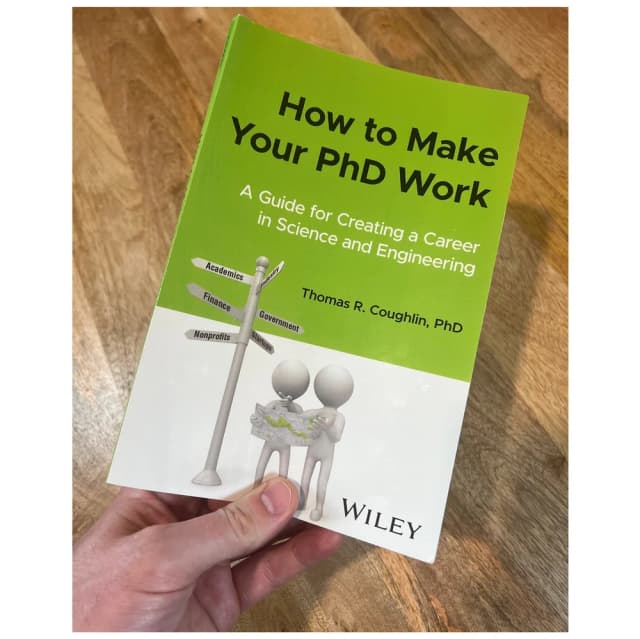
Top Free Career Resources for PhDs

The PhD job market has evolved dramatically. With roughly 40% of new doctorate recipients now heading to industry rather than academia, the tools and resources available to help you navigate this shift matter more than ever. Whether you are actively searching for a job or just beginning to think about what comes next, these are the best free resources available to PhDs right now.
Every resource on this list is genuinely free to use. No hidden paywalls, no bait-and-switch trials. These are tools that can help you assess your strengths, explore career paths, build your professional materials, and connect with people who have already made the transition.
1. myIDP (Individual Development Plan) — Science Careers
Best for: STEM PhDs exploring career options
myIDP is the gold standard career planning tool for science PhDs. Developed by AAAS and Science Careers, it helps you assess your skills, interests, and values across 20 different career paths. The tool maps your profile against professionals already working in each field, so you can see where your strengths align.
What makes it valuable: Unlike generic career assessments, myIDP was built specifically for scientists. It understands that your research skills translate to careers you may never have considered — from science policy to data science to consulting. The goal-setting module helps you build an actionable plan, not just a vague sense of direction.
2. ImaginePhD — Career Planning for Humanities and Social Sciences
Best for: PhDs in humanities, social sciences, and non-STEM fields
ImaginePhD fills a critical gap. While myIDP serves STEM PhDs, ImaginePhD was built by experts from over 50 universities specifically for humanities and social science doctoral students. It provides career competency assessments and maps diverse career trajectories.
What makes it valuable: If you are in English, History, Political Science, Sociology, or any non-STEM discipline, this is your starting point. It helps you identify transferable skills you may be undervaluing and connects them to realistic career paths.
3. VersatilePhD — Career Community and Job Board
Best for: PhDs exploring non-academic careers
VersatilePhD is a career exploration platform that connects PhDs with professionals who have successfully transitioned out of academia. It features a PhD Career Finder that maps non-academic careers by discipline, networking forums, job listings curated for PhD holders, and webinars on professional development.
What makes it valuable: Many universities provide institutional access, so check if yours does. The real power is in the community — reading stories from PhDs who made the jump to industry, government, or nonprofit work can fundamentally shift how you think about your own options.
4. Free the PhD — Workshops and Community
Best for: PhDs who want structured guidance and peer support
Free the PhD offers free career seminars, workshops, and community support for PhDs navigating the transition out of academia. Their Career Seminar series covers practical topics like networking strategy, interview preparation, and career pivoting.
What makes it valuable: The structured seminar format gives you something that self-directed tools cannot — a cohort experience. You learn alongside other PhDs going through the same process, which reduces the isolation that often accompanies career exploration.
5. PhD Source Diagnostics Test — Self-Assessment
Best for: Current PhDs and postdocs assessing their situation
The PhD Source Diagnostics Test helps you objectively evaluate your PhD across three critical dimensions: your project, your advisor, and your lab environment. Based on research from Thomas R. Coughlin’s book The Proactive PhD, it gives you a structured way to answer the question: "How is my PhD actually going?"
What makes it valuable: Most career exploration starts with understanding where you are right now. If your project is stalled, your advisor is absent, or your environment is toxic, those problems need to be addressed before — or alongside — any career planning. This tool gives you that honest baseline.
6. Cheeky Scientist — Industry Transition Content
Best for: PhDs targeting industry roles specifically
Cheeky Scientist offers a large library of free blog posts, podcast episodes, and webinars focused specifically on helping PhDs land industry positions. Topics include resume translation, LinkedIn optimization, salary negotiation, and understanding corporate hiring processes.
What makes it valuable: The content is written by and for PhDs, so the advice is specific to the challenges doctorate holders face — like how to translate academic accomplishments into language hiring managers understand. While they do promote a paid membership, the free content alone is substantial.
7. From PhD to Life — Career Transition Resources
Best for: PhDs (especially humanities) considering leaving academia
From PhD to Life is run by Jennifer Polk, who coaches professors, postdocs, and PhDs through career changes. The site offers free articles, resource guides, and a newsletter covering the emotional and practical aspects of leaving academia.
What makes it valuable: Career transition is not just a logistics problem — it is an identity shift. From PhD to Life addresses the psychological dimension that most career tools ignore. If you are struggling with the idea of leaving academia, this resource speaks directly to that experience.
8. Nature Careers — Expert Advice and Job Board
Best for: Research-focused PhDs in STEM
Nature Careers provides expert career advice articles, personal stories from scientists at all career stages, and one of the most respected academic job boards in the world. Their collections cover everything from postdoc guidance to industry transitions.
What makes it valuable: The advice comes from credible, research-grounded sources — not generic career coaches. Articles are written by working scientists and career professionals who understand the academic landscape intimately.
How to Use These Resources Effectively
Do not try to use all of these at once. Here is a practical approach:
-
Start with self-assessment. Take the PhD Source Diagnostics Test and either myIDP or ImaginePhD (depending on your field) to understand where you stand and what careers might fit.
-
Explore options. Use VersatilePhD and Nature Careers to read about real career paths and see what resonates.
-
Build community. Join Free the PhD or From PhD to Life to connect with others going through the same transition.
-
Get tactical. Use Cheeky Scientist for resume and interview preparation once you have a direction.
-
Stay proactive. As Tom writes in The Proactive PhD, the earlier you start exploring, the better positioned you will be when the time comes to make a move.
The PhD job market is vast and genuinely exciting — but only if you know how to navigate it. These resources are your starting toolkit.