PhD Career Trends 2026: Navigating the Evolving Doctoral Landscape

The landscape of doctoral education and career paths is anything but static. As we navigate 2026, the currents shaping who earns a PhD, in what fields, and where they ultimately land are constantly shifting. Understanding these evolving trends isn't merely an exercise in academic curiosity; it's a strategic imperative for anyone considering, currently pursuing, or mentoring a PhD.
While official, comprehensive 2026 data from surveys like the Survey of Earned Doctorates (SED) will only be fully released in late 2027 or early 2028, we can construct a highly informed picture of the anticipated PhD landscape for this year. By analyzing preliminary indicators, short-term trends from late 2025, and robust projections based on the latest complete data from 2024, we can discern the most salient doctorate trends solidifying throughout 2026. This article will break down these key shifts, presenting our projections for 2026 and directly comparing them to the established patterns from 2024, providing you with a data-informed perspective on the state of PhDs and what to anticipate.
Our goal is to equip you with actionable insights, helping you navigate your own unique "voyage through uncharted waters" with greater clarity and strategic foresight, especially as these new trends solidify.
The Steady Rise of Doctorates, Led by S&E: A 2026 Perspective
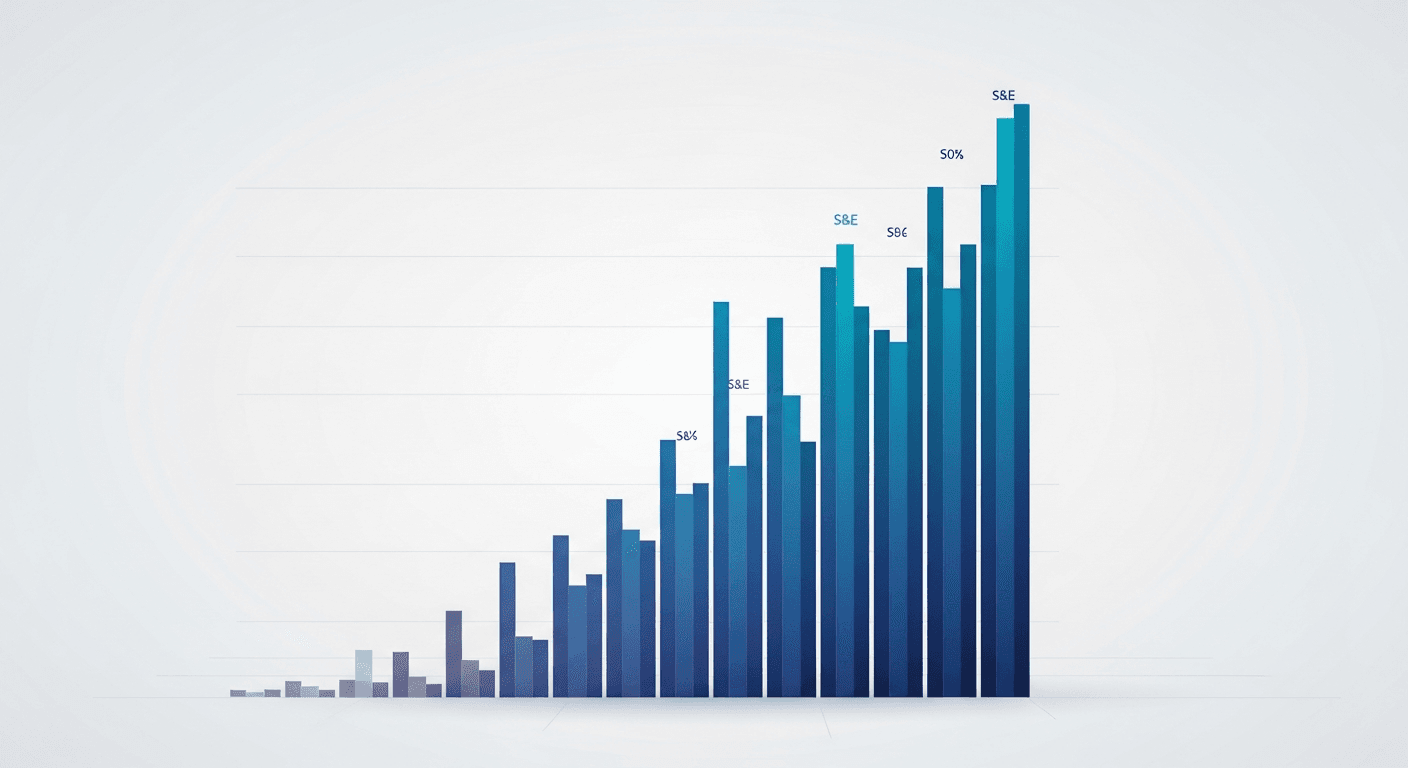
The overall number of research doctorates continues its upward trajectory. For 2026, we project U.S. institutions to award approximately 59,500 research doctorates. This anticipated figure represents a modest but consistent increase from the 58,131 research doctorates actually awarded in 2024, continuing a long-term growth pattern that has averaged 3.0% annually since the SED began in 1958. Importantly, 98.5% of these projected 2026 doctorates are PhDs, maintaining the dominant credential.
Crucially, this expansion is projected to remain overwhelmingly driven by Science and Engineering (S&E) fields. In 2026, S&E doctorates are anticipated to comprise nearly 80% of all doctorates, a slight but notable increase from the 79% share recorded in 2024. This 2024 figure itself was a substantial jump from 66% in 2004, illustrating a significant two-decade shift towards S&E dominance. This trend underscores a broader societal demand for highly specialized scientific and technical expertise, fueled by innovation cycles and global competition. Fields like computer science, engineering, and the health sciences are seeing particularly robust growth, reflecting both student interest and substantial research funding.
Practical Takeaway: If you're considering a PhD, understanding this S&E emphasis is critical. While passion should drive your choice, recognizing the demand in S&E fields can inform skill development (e.g., computational thinking, data analysis) or encourage interdisciplinary approaches that bridge S&E with other areas.
Evolving Demographics: Diversity in the Doctoral Pool
In 2026, the demographics of PhD recipients are projected to continue their evolution, building on the patterns established in 2024. While specific percentages for this year are, by nature, projections, we anticipate a sustained trend towards greater diversity.
International Students: International students remain a vital component of the U.S. doctoral ecosystem. We project that in 2026, their share of doctorates will hold steady or slightly increase from the approximately 36% awarded to temporary visa holders in 2024. Their contributions are particularly pronounced in S&E fields, where they often fill critical research roles. However, shifting immigration policies and increasing global competition for talent mean institutions are working harder to attract and retain these scholars.
Representation of Women: In 2026, women are projected to maintain their majority share of all doctorates, mirroring the trend seen in 2024 when they earned 51.5%. While their representation is strong overall, the distribution across fields remains uneven. We project that in 2026, women will continue to earn a majority of doctorates in fields like education, humanities, and health sciences, while their representation in engineering and computer science, though growing, still lags behind.
Underrepresented Minorities (URM): Efforts to increase the representation of URM students (Black or African American, Hispanic or Latino, American Indian or Alaska Native, and Native Hawaiian or Pacific Islander) in doctoral programs persist. For 2026, we anticipate continued, albeit slow, growth in URM participation, building on the approximately 22% of all U.S. citizen and permanent resident doctorate recipients they accounted for in 2024. This modest increase over the past decade is driven by targeted institutional initiatives and funding opportunities aimed at broadening access and support.
Practical Takeaway: For prospective PhDs, this signals a landscape that increasingly values diverse perspectives and backgrounds. Seek out institutions and programs with demonstrated commitments to diversity and inclusion. For current PhDs, leverage your unique background as a strength and actively participate in efforts to build a more inclusive academic community. Mentors should be aware of these trends to better support and advocate for all their students.
Post-PhD Career Paths: Industry and Non-Academic Roles Gain Ground
One of the most significant shifts we project for 2026, further accelerating trends observed in 2024, especially for S&E doctorates, is the continued diversification of post-PhD career paths. The traditional "academic track" is no longer the sole, or even primary, destination for many new PhDs.
Based on recent SED data, in 2026, we project a continuation, and potentially a slight decrease, in the share of new PhDs pursuing academic roles immediately after graduation, particularly within S&E fields. This projection builds on the 2024 data, which showed only about 45% of U.S. doctorate recipients with definite plans reported post-doctoral positions or employment in academia. Conversely, industry and other non-academic sectors (government, non-profit) are anticipated to absorb an even greater share of PhD talent. For U.S. S&E doctorates in 2024, industry alone accounted for roughly 30% of definite post-graduation plans, a figure we expect to hold strong or increase further in our 2026 projections.
The shift is driven by several factors: the competitive nature of academic job markets, the attractiveness of industry salaries and R&D resources, and the increasing recognition by companies that PhDs bring unique problem-solving abilities and deep domain expertise.
Practical Takeaway: This trend is critical for PhD career planning. Start exploring diverse career options early in your program. Develop transferable skills like project management, communication, and teamwork, alongside your core research expertise. Networking outside academia, seeking internships, and tailoring your dissertation research to address real-world problems can significantly enhance your prospects in the diverse job market of 2026.

Funding Landscape and Time-to-Degree Stability
The funding landscape for doctoral education, while always a concern, is projected to remain relatively stable in 2026, mirroring the patterns seen in 2024. Federal support, institutional grants, and research assistantships remain the primary funding mechanisms. For 2026, the funding landscape for doctoral education is projected to remain largely consistent with 2024, when approximately 90% of all doctorate recipients reported receiving financial support from their university or a federal agency. This anticipated stability is crucial for maintaining the accessibility and quality of doctoral programs.
Similarly, we project the median time-to-degree for 2026 to remain stable, consistent with the 5.8 years of registered time observed in 2024. While individual experiences vary widely, this consistency suggests that program structures and institutional support are generally keeping students on track.
Practical Takeaway: When applying to programs, thoroughly research funding packages and their typical duration. For current PhDs, understand the terms of your funding, actively seek out supplemental grants or fellowships, and work closely with your advisor to manage your project scope to stay within a reasonable time-to-degree.
Conclusion: Strategic Navigation in a Dynamic Doctoral World
The PhD landscape in 2026 is one we project to see continued growth, increasing S&E dominance, evolving demographics, and further diversification of career paths away from an exclusive academic focus. While the overall number of doctorates is anticipated to rise, the shifts in who earns them and where they go are proving profound. Our projections for 2026, carefully grounded in the robust and latest complete data from 2024, confirm that these aren't transient fluctuations but rather steady, long-term trends shaping the future of doctoral education.
Navigating this dynamic environment requires more than just academic excellence; it demands strategic foresight and adaptability. By understanding these trends—from the sustained demand for S&E expertise to the expanding non-academic career opportunities—you can make informed decisions that optimize your doctoral journey and post-PhD success.
Ready to chart your course with greater clarity? Explore the resources at PhD Source for deeper insights into PhD careers, program navigation, and strategic planning. Thomas R. Coughlin's book, Making Your PhD Work, offers invaluable guidance, and our newsletter provides regular updates to keep you ahead of the curve. Your successful PhD journey begins with informed choices.